
Adriano Anfuso · Night sky photography
The landscape
after dark
Night-sky photography is where landscape and astronomy meet. The stars, the Milky Way and faint atmospheric light rule the scene, but the place underneath still matters just as much.
Click any image to open it full screenWhy photograph the night?
Under a dark sky
Everything slows down
Night photography slows everything down. You spend time outside, let your eyes adjust, become aware of the landscape and start noticing details that disappear during the day. The stars are part of it, but so are the silence, the darkness and the feeling of being somewhere completely different without having gone very far.
Dark-sky landscapes
Stars melt with
the landscape
A nightscape works best for me when the sky and the place are inseparable. Putscheid, Lultzhausen, Hosingen, Wincrange and Boulaide each give the stars a different foreground, horizon and sense of scale.

Looking up
A moment beneath the Milky Way in Wincrange, with me on the other side of the camera.

Putscheid
A dark-sky landscape in northern Luxembourg, where the Milky Way becomes part of the place rather than a background added to it.

Airglow over Lultzhausen
Alongside the stars, the camera recorded airglow: a faint natural emission from Earth’s upper atmosphere, far subtler than an aurora and usually easiest to detect under a dark sky.

Hosingen after dark
A rural nightscape where the foreground and the sky belong to the same photograph: one place, seen after daylight has gone.

Wincrange at night
Wincrange is one of the places I return to often. At night, familiar fields and horizons become a framework for the stars above them.

Boulaide
A quiet Luxembourg nightscape built around natural darkness, open sky and the relationship between the celestial and terrestrial landscape.
The natural night
A dark sky is more than a photographic condition. It is an opportunity to reconnect with the wider universe.
Places under the stars
Nature and
the sky above
Nightscapes bring a human scale into the night, connecting the night sky with the beauty of our planet.

Esch-sur-Sûre
The compact village and surrounding terrain create a meeting point between artificial light, natural darkness and the sky above.

Vianden by night
Historic architecture changes the scale of a nightscape. The stars remain distant; the town gives them a human reference point.

The Napoleon Tree
The lime tree at Bourscheid’s Napoleonsknäppchen stands on a historic viewpoint. The original liberty tree dated to the Napoleonic era; the present lime was planted secretly by local residents in 1941.
Reading the whole sky
The whole sky
above us
Most photographs isolate a piece of the night sky. An all-sky image does the opposite: it puts the complete celestial hemisphere into one frame and makes the sky itself feel like a landscape.
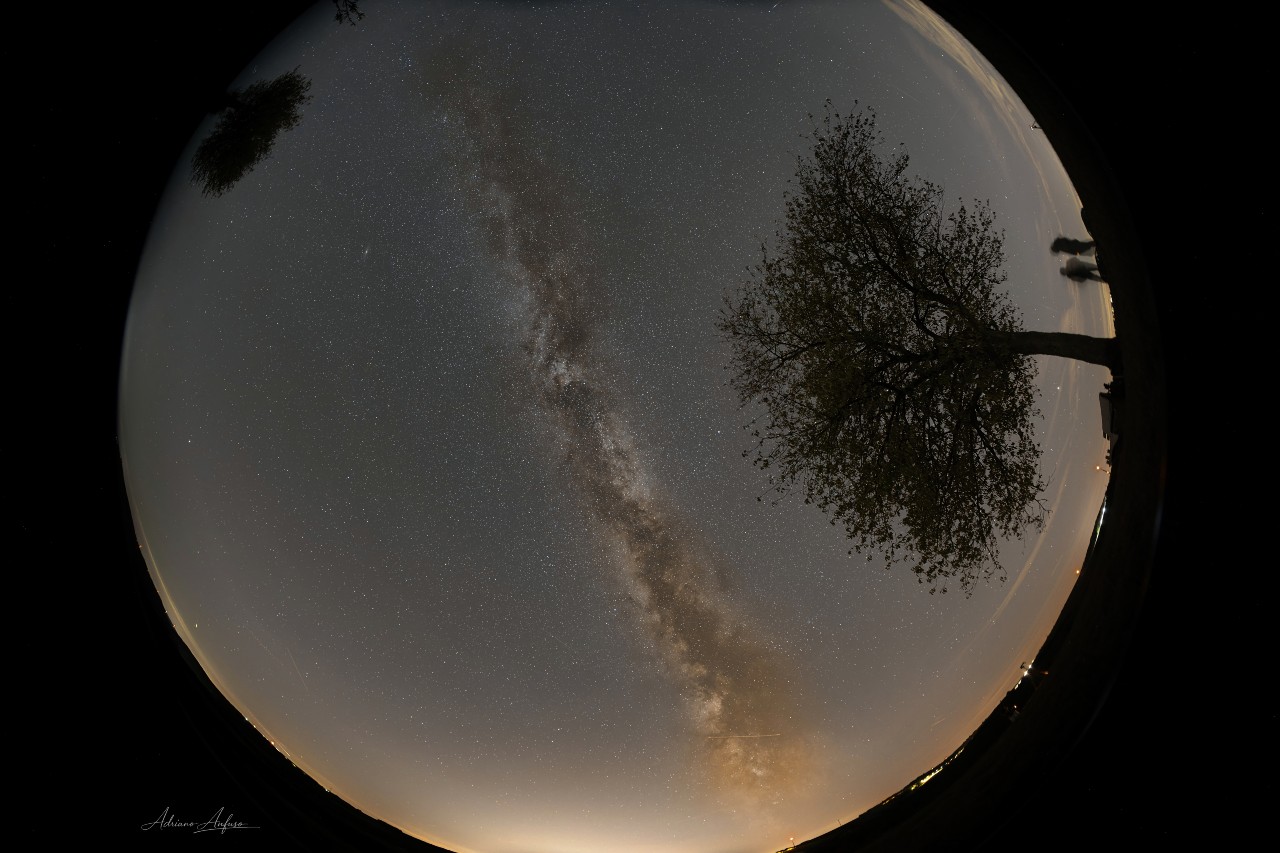
Beneath the whole sky
The Milky Way crosses a sweeping fisheye view, framed by the dark silhouette of a tree.
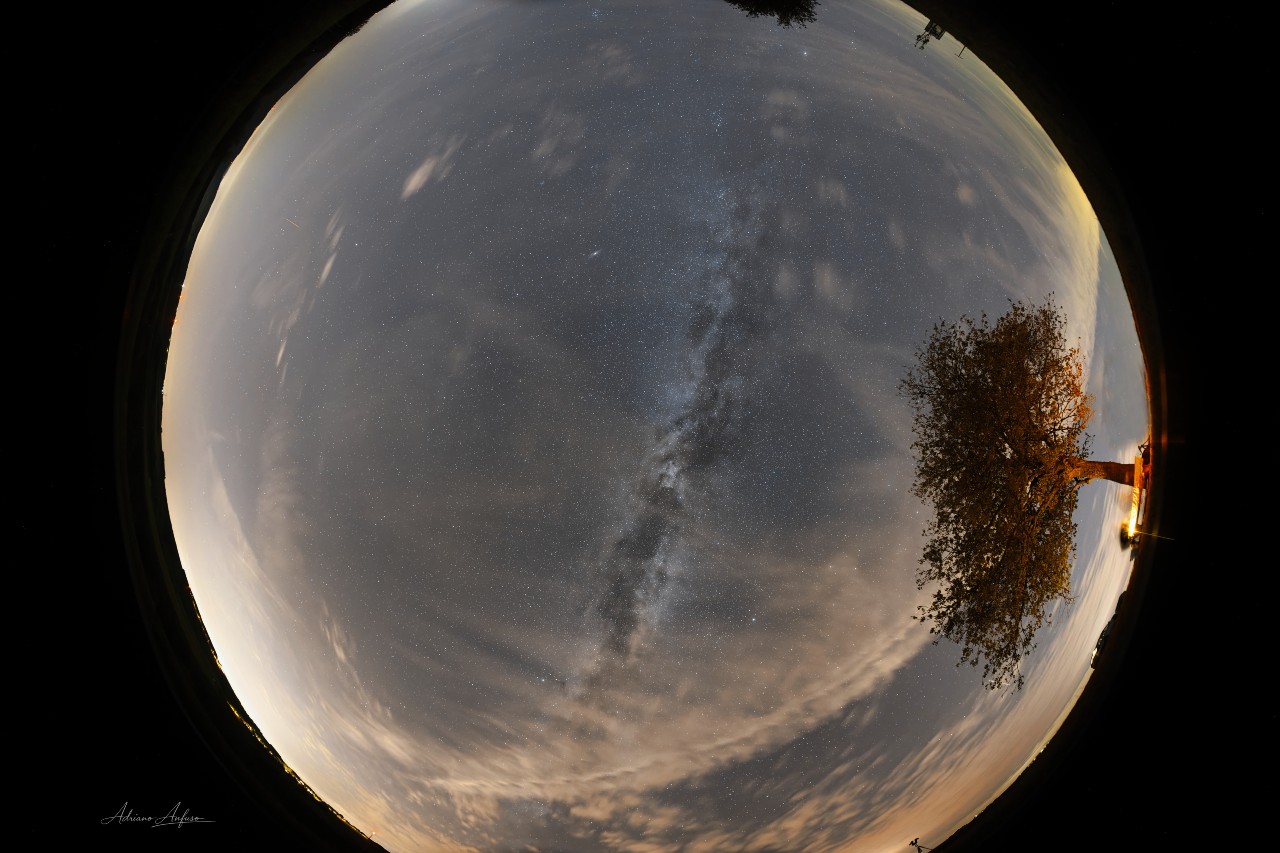
A sky in motion
Clouds drift across the stars above Putscheid, with a tree anchoring the edge of the frame.

Wincrange all-sky
A whole-sky view changes the way we read the night. Instead of isolating one constellation or section of the Milky Way, the frame shows the celestial dome as a complete environment.

Kiischpelt all-sky
A wide view of the night above Kiischpelt, placing the complete sky in relation to the landscape below.

Milky Way over Bourscheid
A broad Milky Way view above Bourscheid, showing how the structure of our galaxy stretches across the night landscape.

Clervaux all-sky
The night above Clervaux seen as one continuous environment, from horizon to horizon.
All-sky perspective
Looking at the full sky reveals how to cosmos shape the entire place around us.